Erica Hill, an employee of local smoke shop “Universal Smoking Co.” on Vermont Ave., said she hasn’t seen ICE agents. But she has noticed fewer customers. And more fear.
While national conversations about ICE have shifted toward Minnesota in recent weeks, local businesses in Los Angeles said they have experienced economic struggles because of fewer customers, especially those of Latin and Hispanic descent.
“It’s just because they’re afraid,” Hill said. “They’re afraid that as soon as they walk out of their house, they’re going to get detained, which I totally understand. So I don’t get a lot of Latin American customers here since ICE has been out.”
On Monday, the Los Angeles County Department of Economic Opportunity and the county’s Economic Development Corporation reported that $3.7 million dollars of business losses occurred between July and September of last year, when ICE presence peaked in L.A.
The report cites numerous data points, including surveys with local business owners, economic and workforce data and immigration court records.
The community surveys, which ran in the immediate aftermath of the heightened ICE activity from mid-September to mid-November of 2025, found that 90% of business respondents “perceived growing distrust across federal and local governments.”
In South-Central L.A., business owners said they noticed a difference in both sales and customer turnout.
Oscar Mendes, whose father owns the business “3 Brother’s Bike Shop,” said that while the store didn’t see a noticeable decrease in overall sales, there was a decrease in people who came into the store.
“We did see less people. I guess because they were afraid to go out,” Mendes said, adding that there is a general rise in fear among the community surrounding USC.
“They don’t want to go out because they’re basically profiling people, just by the way they look. They can’t just go outside freely because they have that fear of getting caught. And they cannot go to work or things like that,” he said.
Mendes also said that the atmosphere of fear impacts other businesses that the bike shop works with. “That’swhat affects not just us, maybe all businesses as well. Because they’re not selling us parts or things like that,” he continued.
Mendes and his family used to live in South-Central, but relocated to Monterey Park. He said he has never seen something similar to ICE actions before. “I guess it’s because of the administration or the government, it’s just spiked up more,” he said.
Harry Mofarrah has owned Advance Cleaners on W 29th St. for over 25 years, said he hasn’t seen ICE nearby due to the high concentration of USC students.
The business provides dry cleaning and laundry services with student discounts. Unlike Hill, he noted that his customer base, also mostly USC students, didn’t seem affected by ICE.
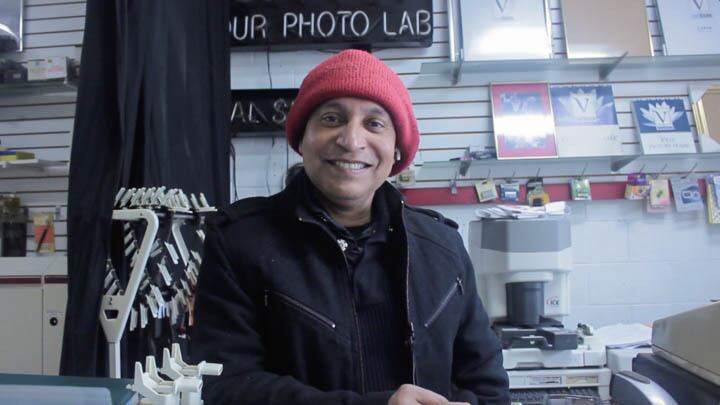
Gazi Alam owns photo services store Quik Pix Photo Lab, located on Vermont Ave. Alam echoed similar experiences to other local businesses with customer losses. The lab offers photo processing, developing and passport photos and has been in business since 1981.
“The last three months, my business has been down for a while. Especially last month, my sales are way down than my expectation,” Alam said. “I think there’s a lot less [customers] especially because the local community demographically is diverse and very Hispanic,” he continued.
“For myself, I’m scared to drive around the road, on the freeway. Because of my color, I’m thinking maybe [ICE] can stop me,” he said.
Alam said that several stories came to his mind about local businesses moving away or losing the business because they rely on the work of immigrants.
Hill said that surrounding businesses were in communication about ICE.
“Everybody is on guard and trying to have high spirits about it,” she said. “But it is scary because you don’t know who’s going to be next.”