
Editor’s Note: Omar Mejia currently lives on the Sol y Luna and Somerville floor.
USC officially removed the freshmen Living Learning Community (LLC) cultural floors, taking them off the housing website sometime after August 31st, according to an article released by Daily Trojan.
Remaining LLCs now live under the name Special Cohorts. Residential Advisor (RA) Daniela Rocha Acosta, who advises the First Generation Plus floor for first-generation, low-income college students, says, “In the beginning of August, that’s when we found out the LLCs would be transitioning, sunsetting down, meaning they cut the LLCs.”
The Living Learning Communities have been residential floors that specifically provide space for students from minority communities to reside in. The LLCs have been hosted by Residential Advisors who plan cultural events. As a whole, these floors allow students, mainly freshmen, to live amongst people of a similar demographic and cultural background to them. Multiple freshmen emphasized the importance of having a safe space to relate to others like them.
According to Acosta, Birnkrant LLC RAs—which consists of the First-Generation Plus, APIDA (Asian, Pacific Islander, and Desi American), and Gender Inclusive floors—have received a 92% budget decrease between the 2024-2025 and 2025-2026 school years.
Acosta was in the Latino cultural floor, El Sol y La Luna, her freshman year, which was located in Pardee Tower. “Being there, in a cultural space, really helped me get adjusted to USC—and adjusted to the people more than anything, which was something that I was really scared of coming into USC.” This is what inspired her to become an RA.
Acosta wanted to facilitate mentorship among residents, particularly freshmen. “I try to do that through programming, celebrating the identity, and acknowledging the challenges that come with it that other people don’t experience. To be able to do that for first-year residential students is a big mission on my end,” she said.
Simeon Waller, RA of Somerville, the Black cultural floor, says that he decided to be an RA for Somerville because he knows “how important having a sense of belonging is, especially going to a PWI where people don’t look like you.” Waller, like Acosta, wants to help the freshman class transition more easily into college.
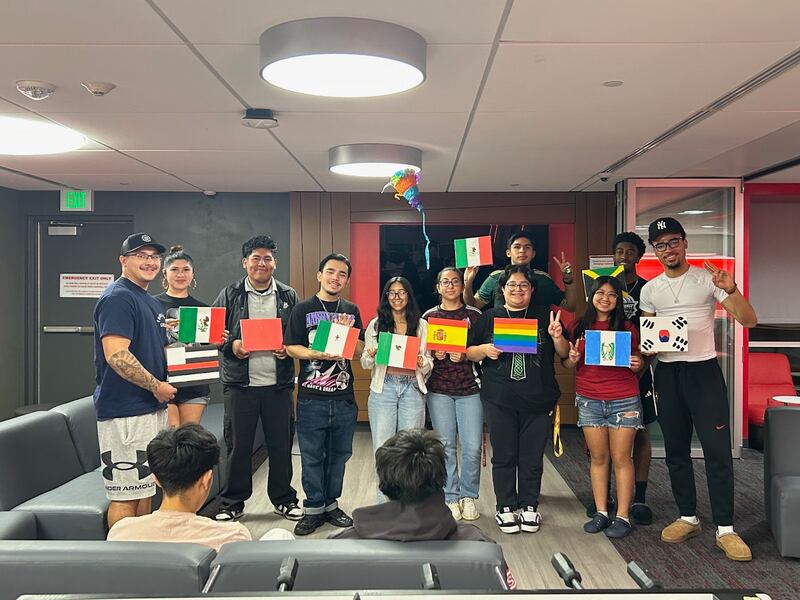
This year, issues with low numbers of LLC applicants weakened the LLC experience for residents.
According to Acosta, this year, she was not provided with the number of First Generation Plus residents. “This year, they [Residential Living] did not provide a roster for me. The year before, it was 30 out of 44 residents. I believe the 2023 to 2024 cohort was the first-year for the First Generation Plus LLC,” she said.
This year, El Sol y La Luna and Somerville both received so few applicants that the two floors were combined into one. Josue Ruiz, a first-year resident of the now combined El Sol y La Luna and Somerville floor, says, “It’s a little tragic and sad, honestly, because it’s supposed to be the entire floor. But now…it’s just a couple rooms.”
In a statement to Annenberg Media, Residential Education said, “Due to lower student interest in some of our Living Learning Communities this year, we expanded our cultural programming to benefit all residents. This more expansive approach will continue to provide residents with a strong sense of community, along with many shared experiences.”
Acosta explains why she thinks the LLCs received such a low number of applicants.
“I think that USC Housing can play a role in it. Residential Education, which I’m a part of, and USC Housing are two different entities. USC Housing does the housing applications. Residential Education does everything when it comes to policy violations to community safety. So, although we work closely with each other, I think that there may have been miscommunication throughout the years as to how much promotion we do [for the LLCs].”
The applicant portal has been a central way for incoming freshmen to discover the LLCs.
Yadira Maldonado Orozco, a first-year El Sol y La Luna and Somerville resident, says that she “didn’t really know about the floors until applying for housing and I just saw the option for it. I think it should be advertised more.”
First-year Somerville and El Sol y La Luna resident Emily Njau said, “USC could really benefit from implementing a more easily accessible page on the LLCs, and maybe even having a little section on the housing emails.”
Nadia Carlos, a first-year student and former resident of the First Gen LCC, transferred housing at the beginning of the school year due to the lack of first-generation students on the floor. “Honestly, I couldn’t really find many other first-gen students on the floor. There’s only about two others I knew on the LLC.”
Carlos added, “The community of first-gen or low-income students I was looking for weren’t really there.”
Budget decreases are an issue for LLC RAs this year, too. Compared to last year, LLC RA’s have a significantly smaller amount of funds for cultural events.
Acosta states that specifically, “In Birnkrant, there were three LLCs. There was the First Gen Floor, which is First Generation, low-income, undocumented, foster youth. Then we have the APIDA floor, as well as the Gender Inclusive Floor. All three of us had a budget…more than $7,000 a year. All RAs…now have the same budget. It’s less than $500 a semester.”
Residential Education did not respond to numerous attempts by Annenberg Media to receive additional information on these figures.
Waller describes, “I was already talking with my bosses on planning something for Black History Month, but because of the fund cuts, it’s harder for us to plan anything.” Waller added, “We as RAs aren’t able to have the funds and means to plan more events.”
Last year was Acosta’s first-year as an RA, in which she spent a lot of the RA budget on many events and opportunities outside of campus for students to learn about LA.
The removal of the LLCs comes at a time when the federal Trump administration is actively pressuring universities across the nation to remove themes of diversity, equity, and inclusion from their school curriculum and programming.
Brandon Surpris, a first-year Somerville and El Sol y La Luna resident, says, “Given the current [presidential] administration, it’s not surprising…It’s not much of a secret that the US government is trying to crack down on things that are seen as DEI.”
Waller explains that Living Learning Communities have transitioned to being called Special Cohorts, and relates this to his overall stance that USC is taking steps back on diversity and inclusion amidst the anti-DEI movement taking place across the nation.
Acosta doesn’t know for certain why LLCs went from having budget cuts to being completely removed, but speculates, “I believe it came from pretty high at USC, whether that’s trustees or other administration.”
The LLCs have consistently transformed the freshman experience for students who have lived in them. Current residents explained why the LLCs are a worthwhile tool in strengthening the college experience for students.
Brandon Surpris says, “Whether or not USC decides to change one day and offer more support, those spaces are important because it’s about grounding ourselves in a school that wasn’t really made for us and in a lot of ways doesn’t function to support us in the same way it supports other peers.”
Acosta says that “USC [declining to sign] the Trump administration’s compact is a big stepping stone. I hope that LLCs are truly brought back in a way where it’s out loud and with pride as something that people know exists and want to be a part of.”
USC Director of Residential Education Shigeo Iwamiya did not respond to requests for comment.